The steamy Amazon jungle is a tangle of life, where myriads of tropical species interact, compete, and live symbiotically with each other.
From the Andes Mountains we head for the Amazon jungle, a difference in height of about 4000 metres, and a huge difference in biotope – from cool, misty mountain to hot and steamy jungle. We are in the southernmost finger of Colombia, just a whisper away from Peru and Brazil. This is where the legendary Amazon River takes turns flowing through all three countries.
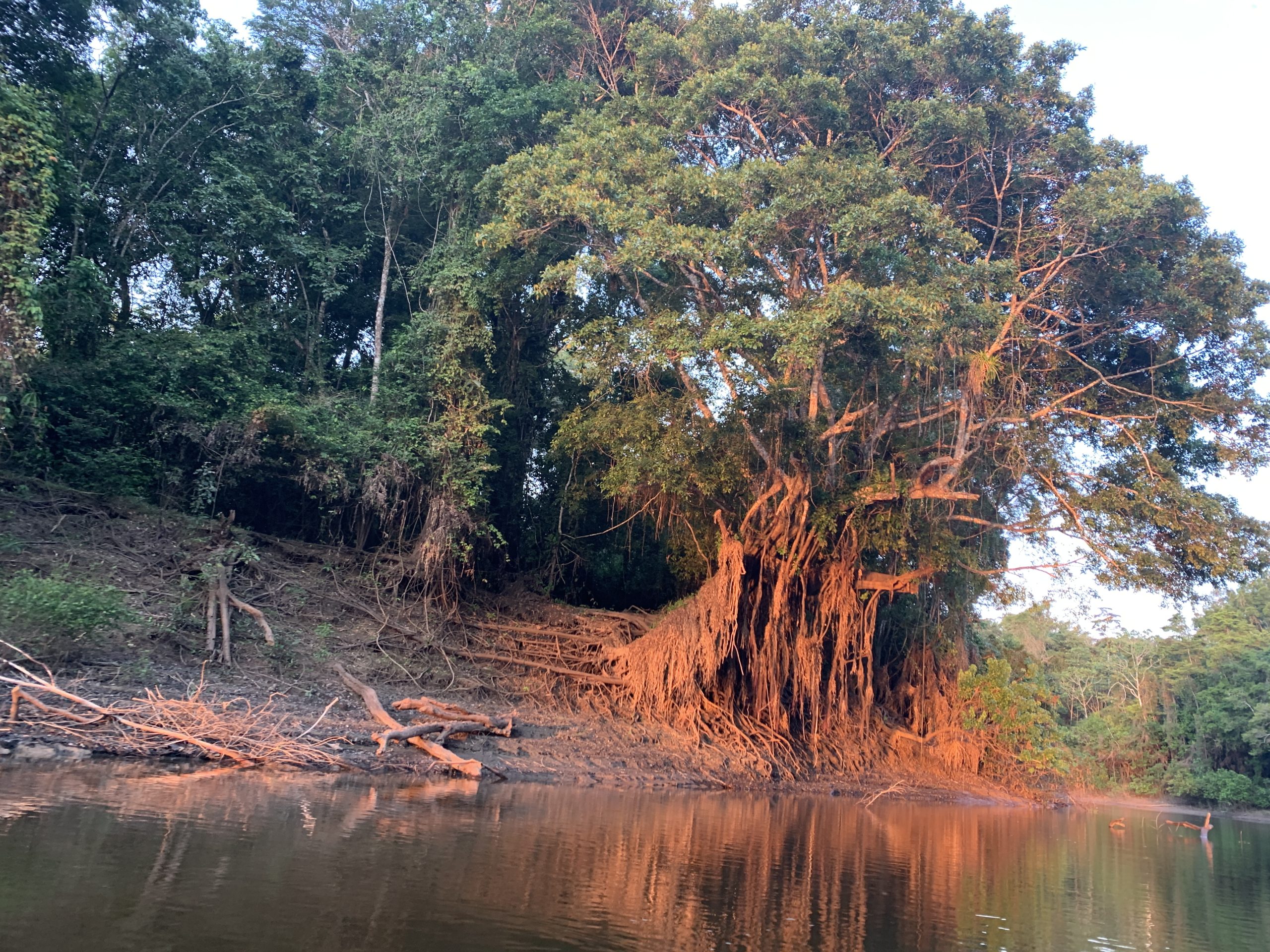
We stay one night in Leticia on the banks of the Amazon. I am thrilled to actually be here, by the iconic, exotic Amazon River in the middle of a huge rainforest, the Earth’s “lung”, that sucks up CO2 and provides us with oxygen. The importance of this function for the well-being of the Earth cannot be stressed too much.
Just before dusk we take a stroll to Leticia’s Parque Santander where thousands of White-winged Parakeets and Southern Martins congregate each night in a cacophony of squawks and flapping feathers before settling down for the night. Bat falcons grab the opportunity for a meal and we even see one with a hapless bird in its claws. Dinner. If Hitchcock’s movie “The Birds” frightened you, then do not go to this park at dusk. You do not view the birds from a distance; you are in the midst of the action. It is totally fascinating, if you do not have a bird phobia (ornithophobia).
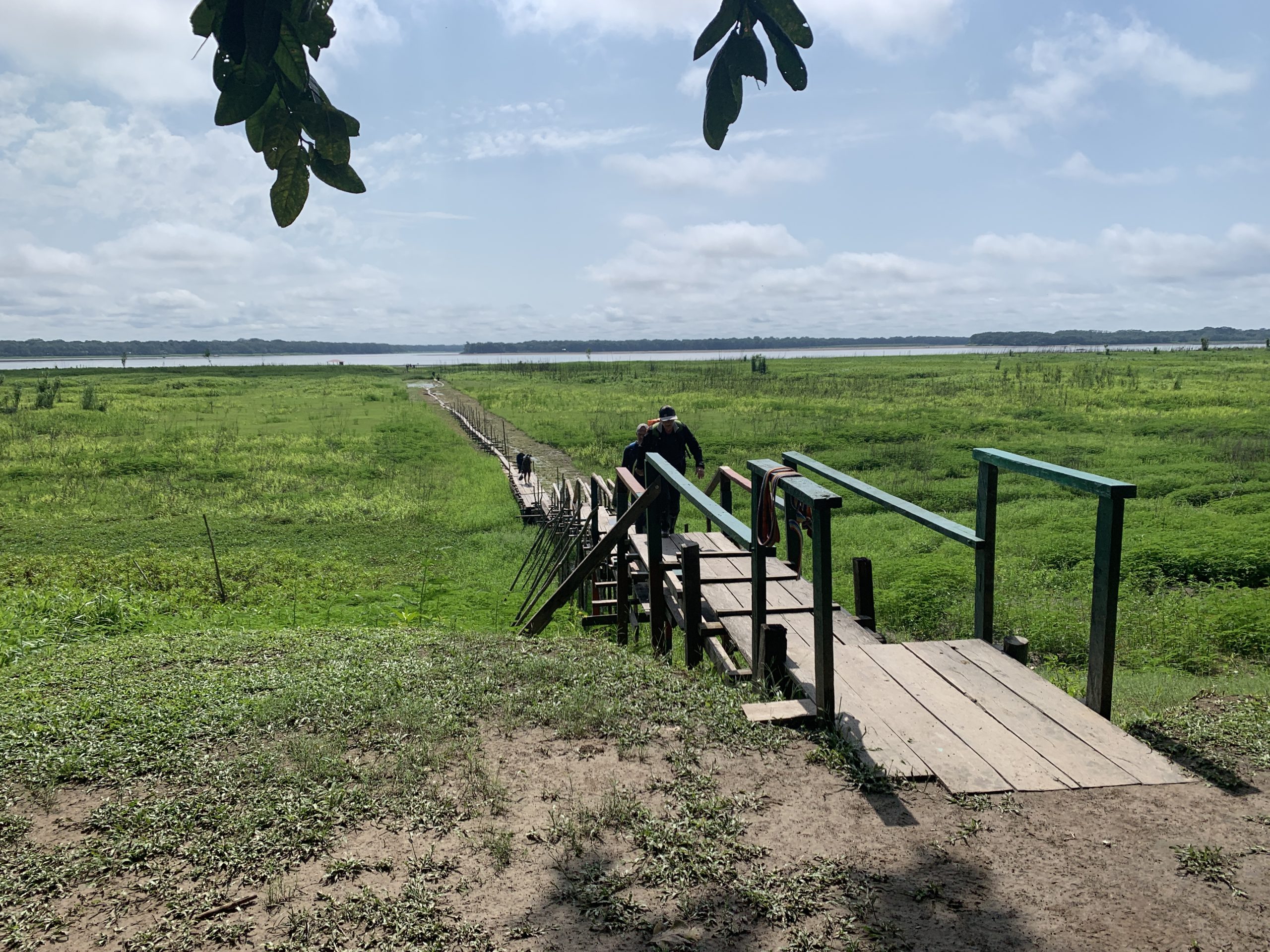
To get deeper into the jungle the only possible route is by water. First, we have to make our way to the boats. Carrying our luggage, we cross through town, traverse an island, then balance on a boardwalk, which at times shrinks to just a single board. In the heat and humidity. Phew!
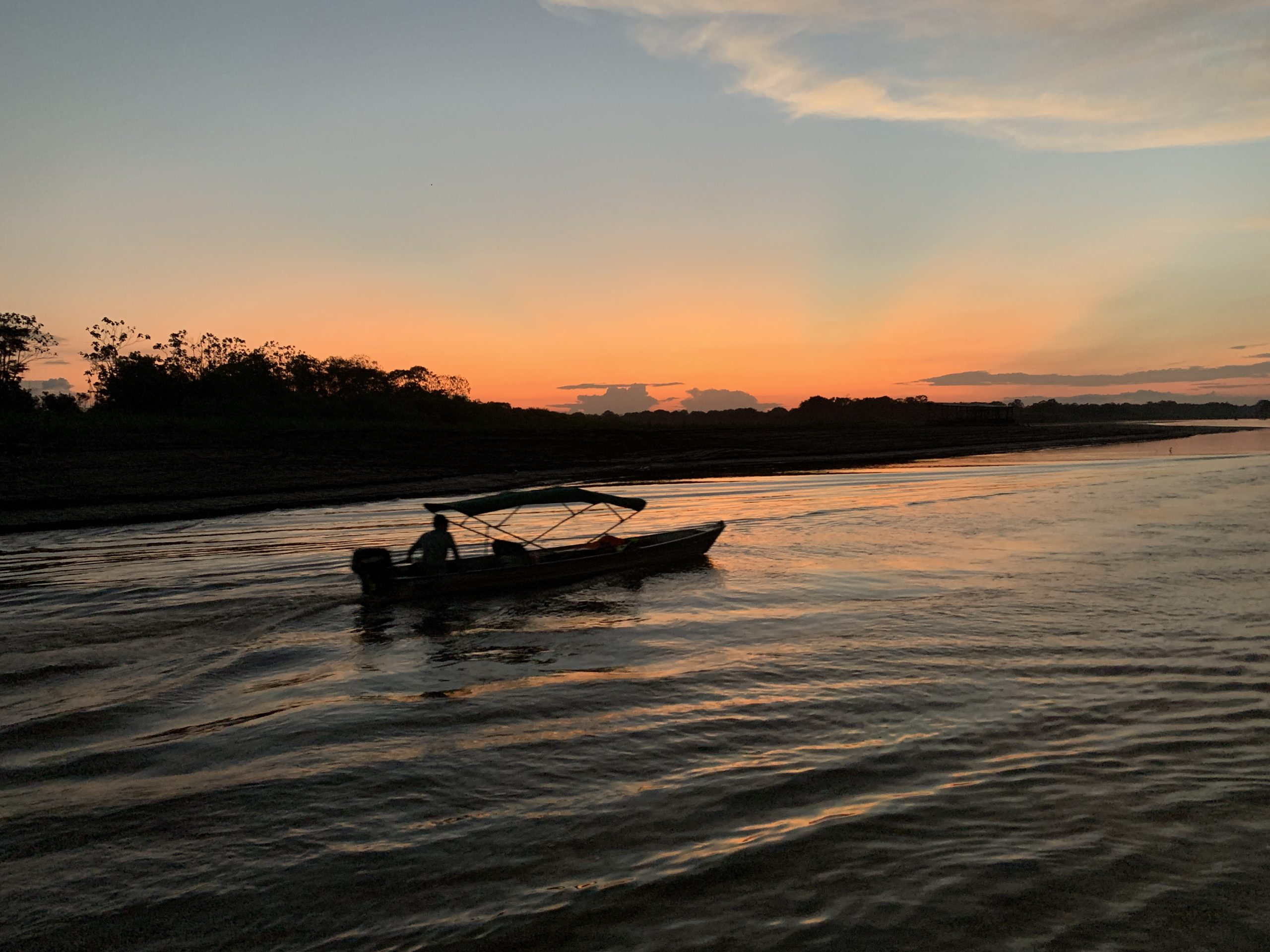
The motorboats transport us for hours along narrow waterways as we listen and look for wildlife. I note 16 new species of bird in my diary as well as pink river dolphins and white river dolphins.
The river and its tributaries are the life-blood for the people here. The waterways are important for transportation and fishing. Some people live on the river in houses on stilts. Kids play in the water.
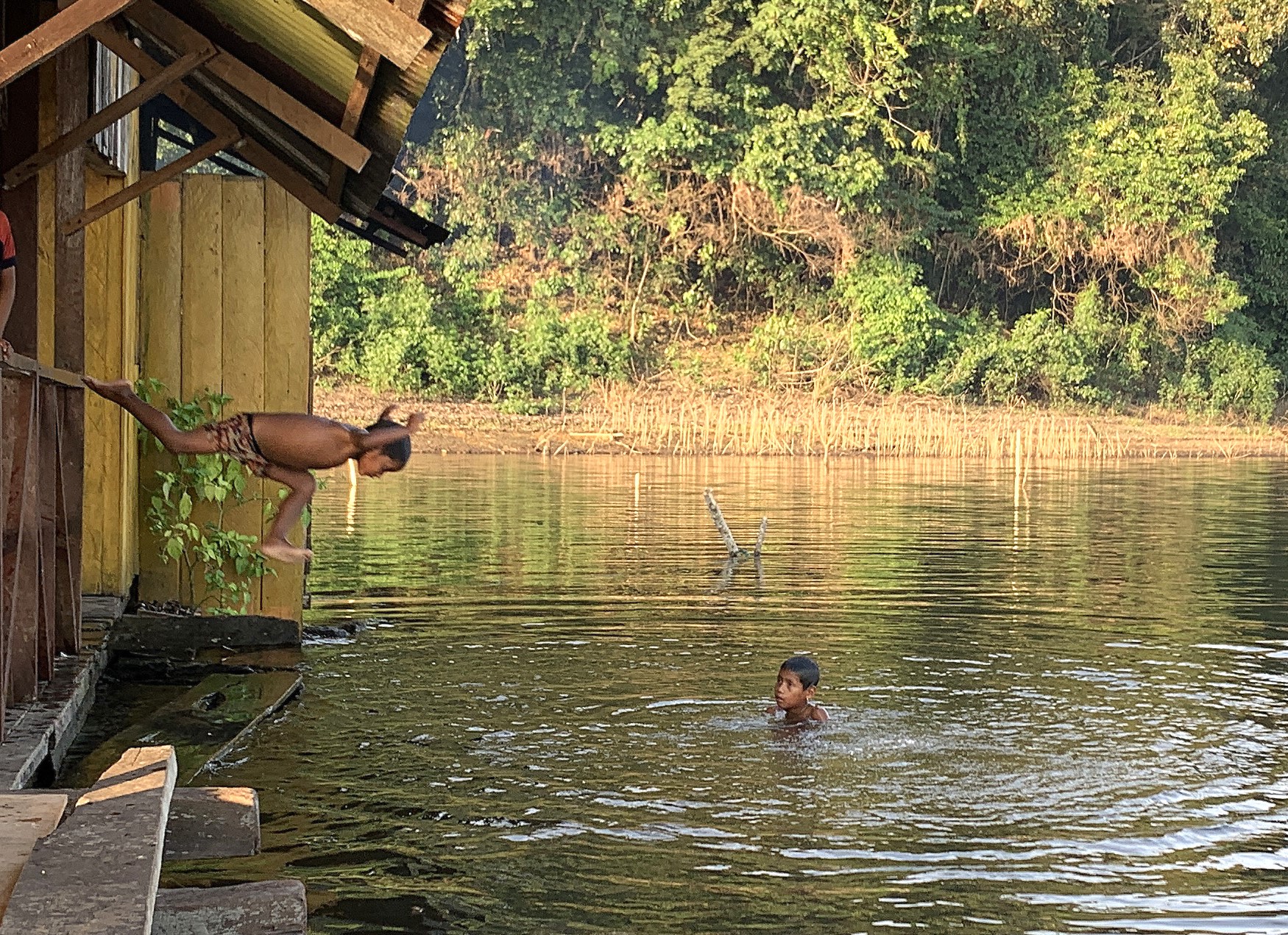
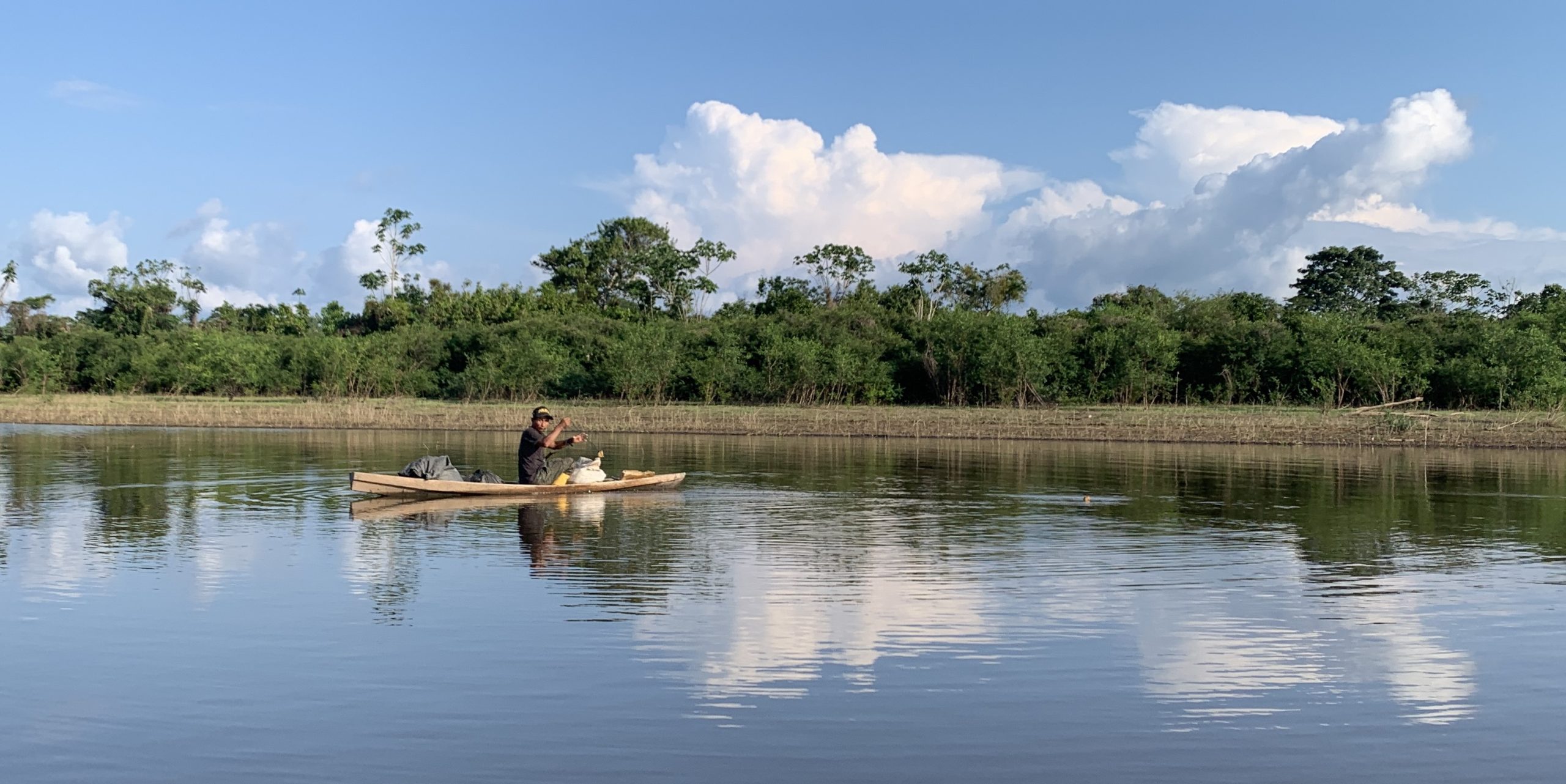
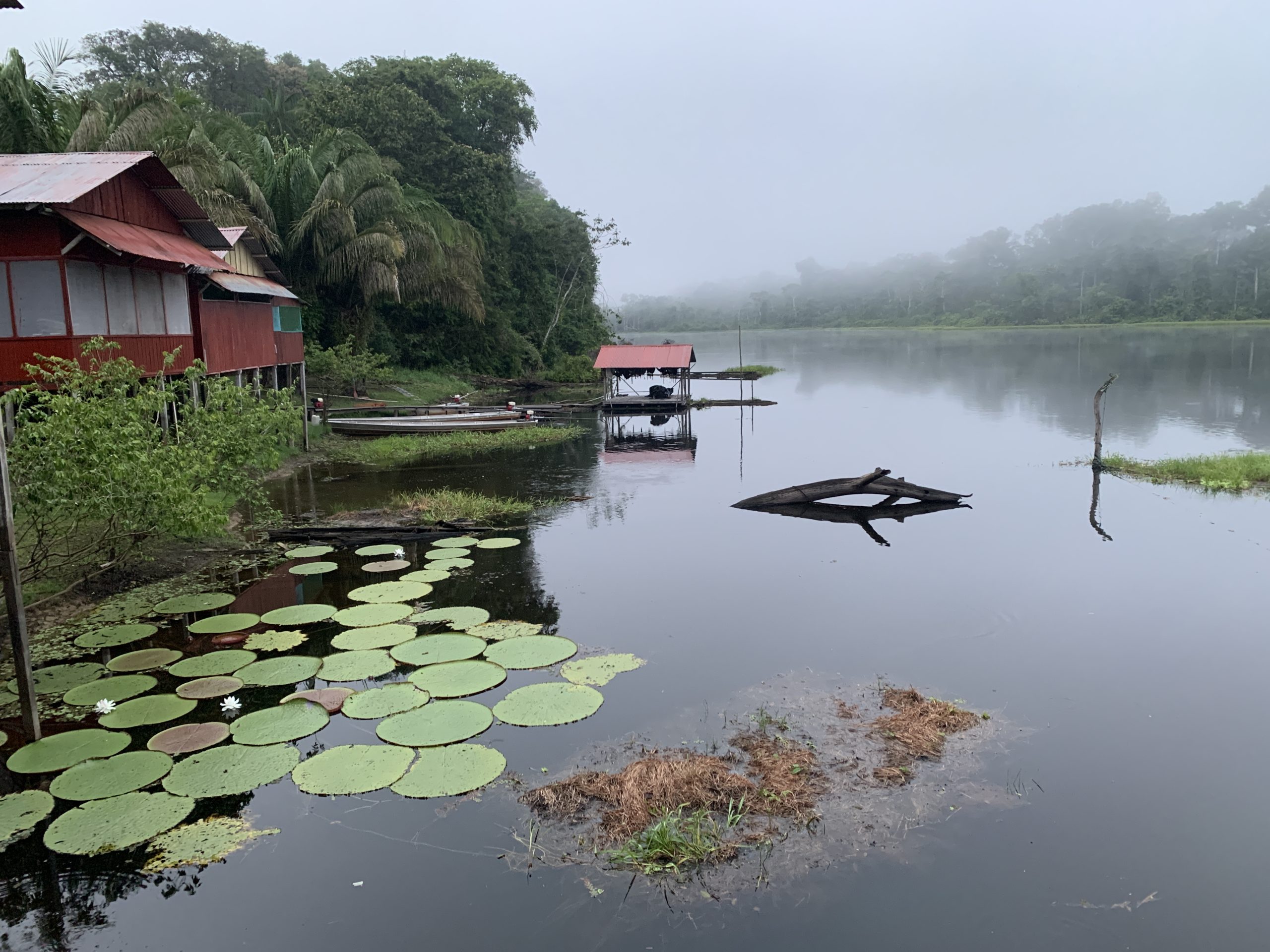
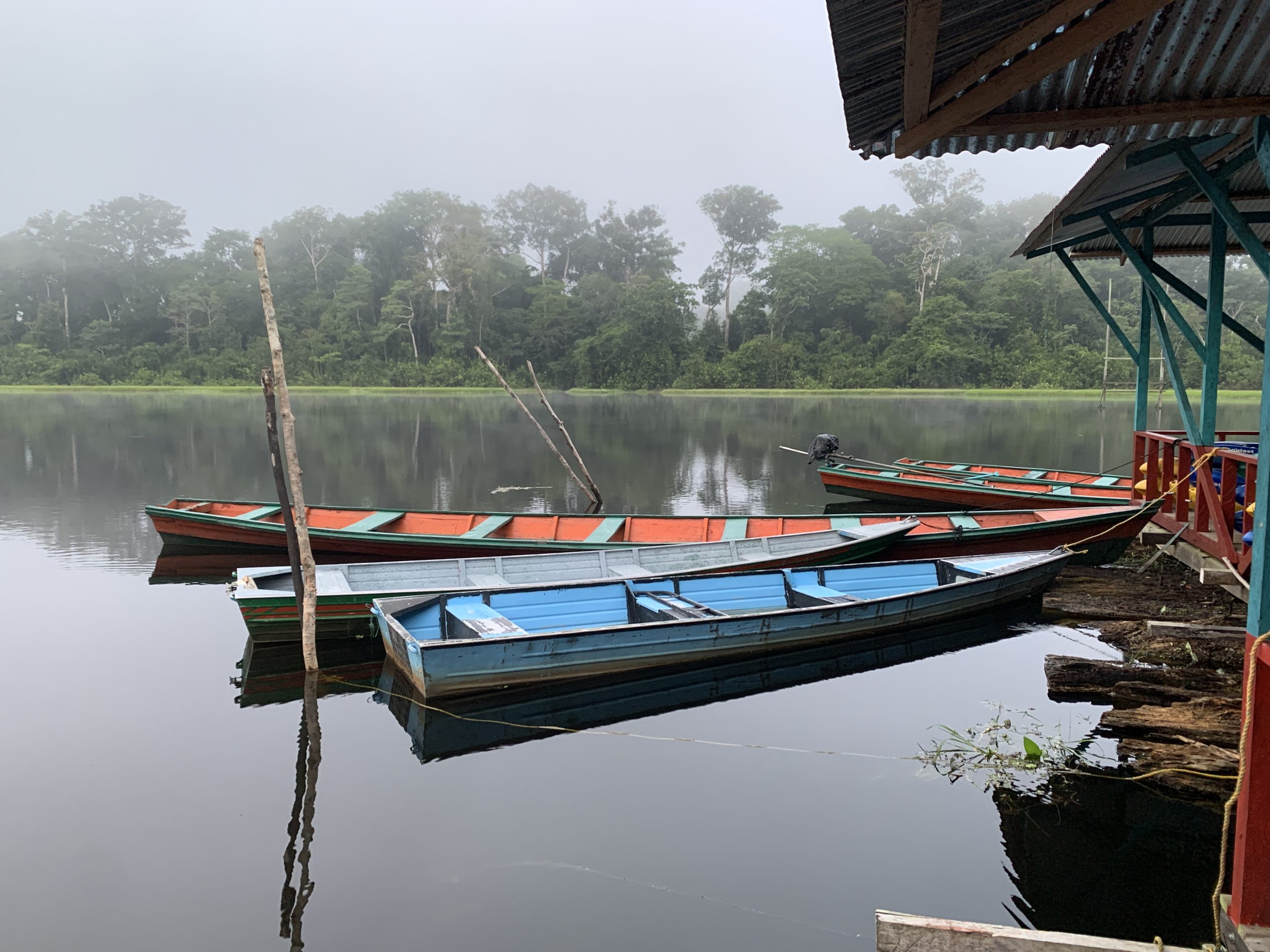
We stop for lunch at a tiny jungle village in the Marasha Natural Reserve. Here, the indigenous Ticuna people experienced some restrictions in their way of life when the area became a natural reserve. To offset the problem, the government offered free courses in ecotourism. Now, besides trading fish for various goods, the villagers earn cash which they use, for example, to send their children to school. Walking around the village environs, we see a three-toed sloth with a baby sloth clamped on to its stomach., various butterflies and six more bird species for my diary.
We continue our riverine journey to the Ticuna village of Puerto Nariño, deep in the rainforest. On the way we can glimpse Peru. Here, the border between the two countries seems as flowing as the water. The villagers have decided that their village should be sustainable. They have no motorised land vehicles, and they either recycle, reuse or make compost from their waste. They collect rainwater and produce electricity from an energy-efficient generator which is shut off at midnight.
After a couple of days here we travel even further into the jungle.
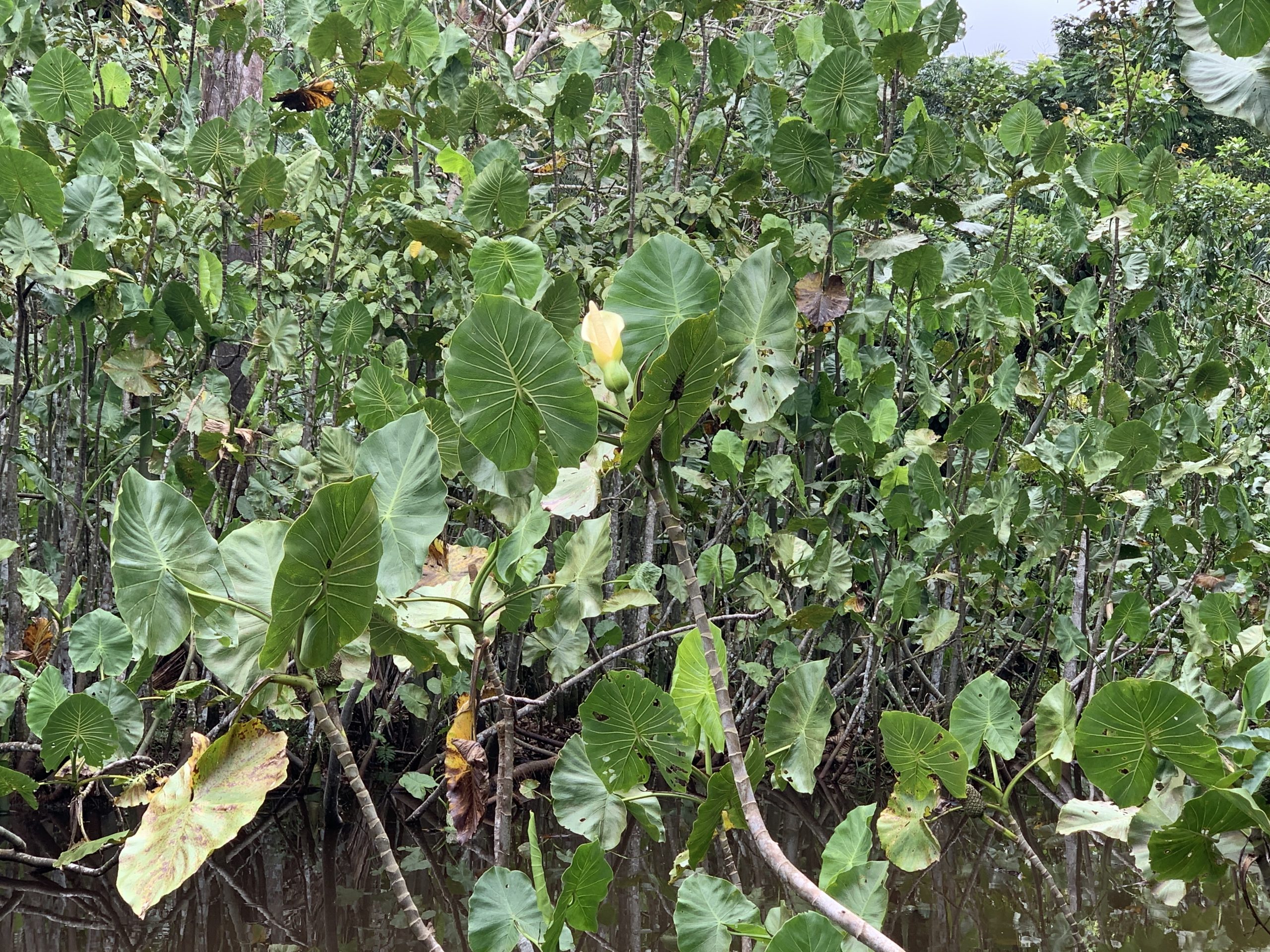
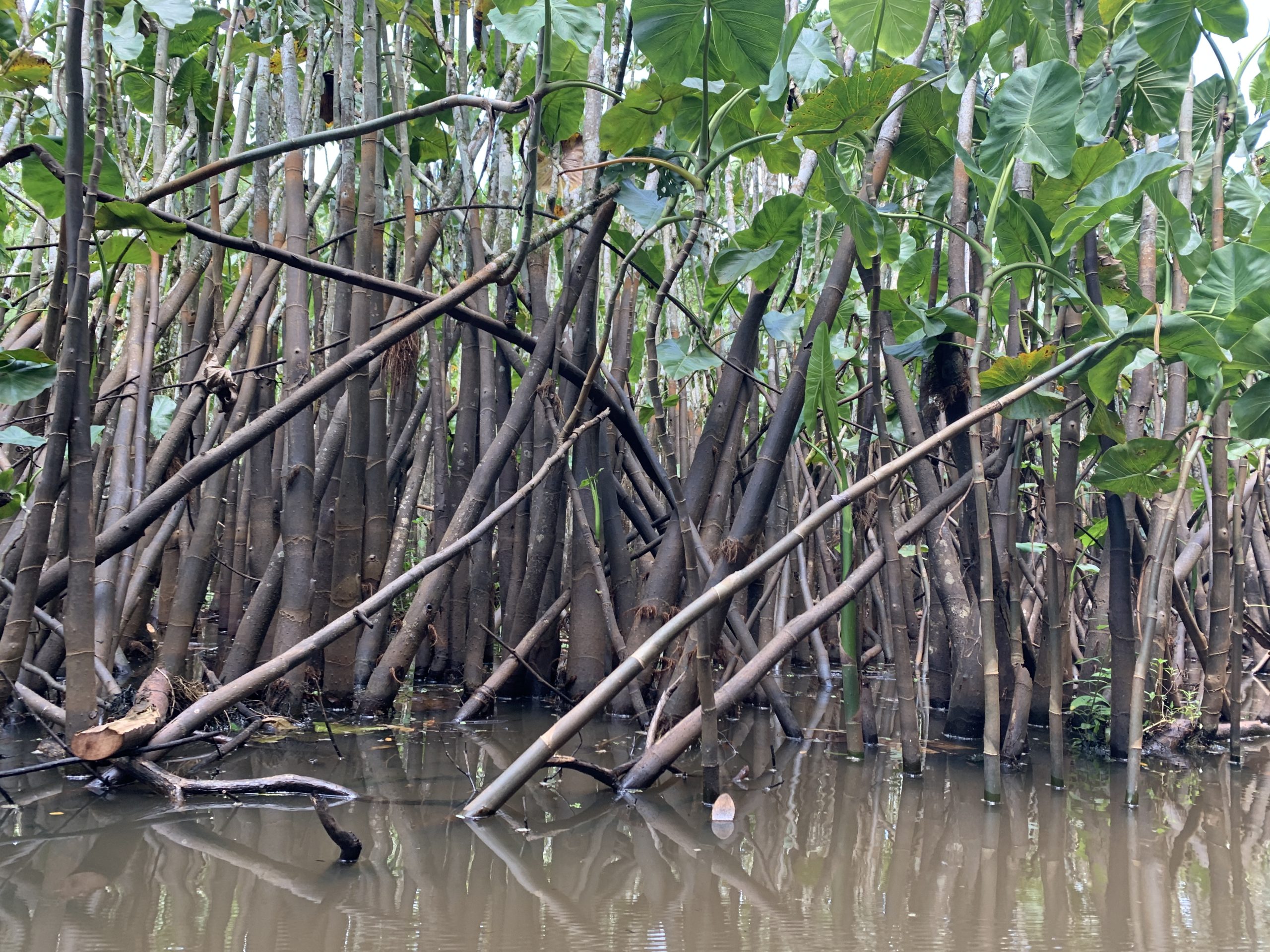
Unfortunately, I am laid flat with diarrhoea for almost two days, so I miss out on some of the excursions and most of the meals. Added to that, I forgot my book and reading glasses at the hotel in Leticia so I must endure three days without reading. Disaster!
Instead, I lie in my bed dozing and listening to the sounds of the animals in the verdant, peaceful surroundings. There is an incredible array of sounds, especially at sunset and sunrise. It seems as though each species has its own aria in the concert, and they take turns giving each other time to sing their songs. When the avian chorus is complete for the evening, the performance is taken over by frogs and cicadas. The whole thing starts all over again in the morning.
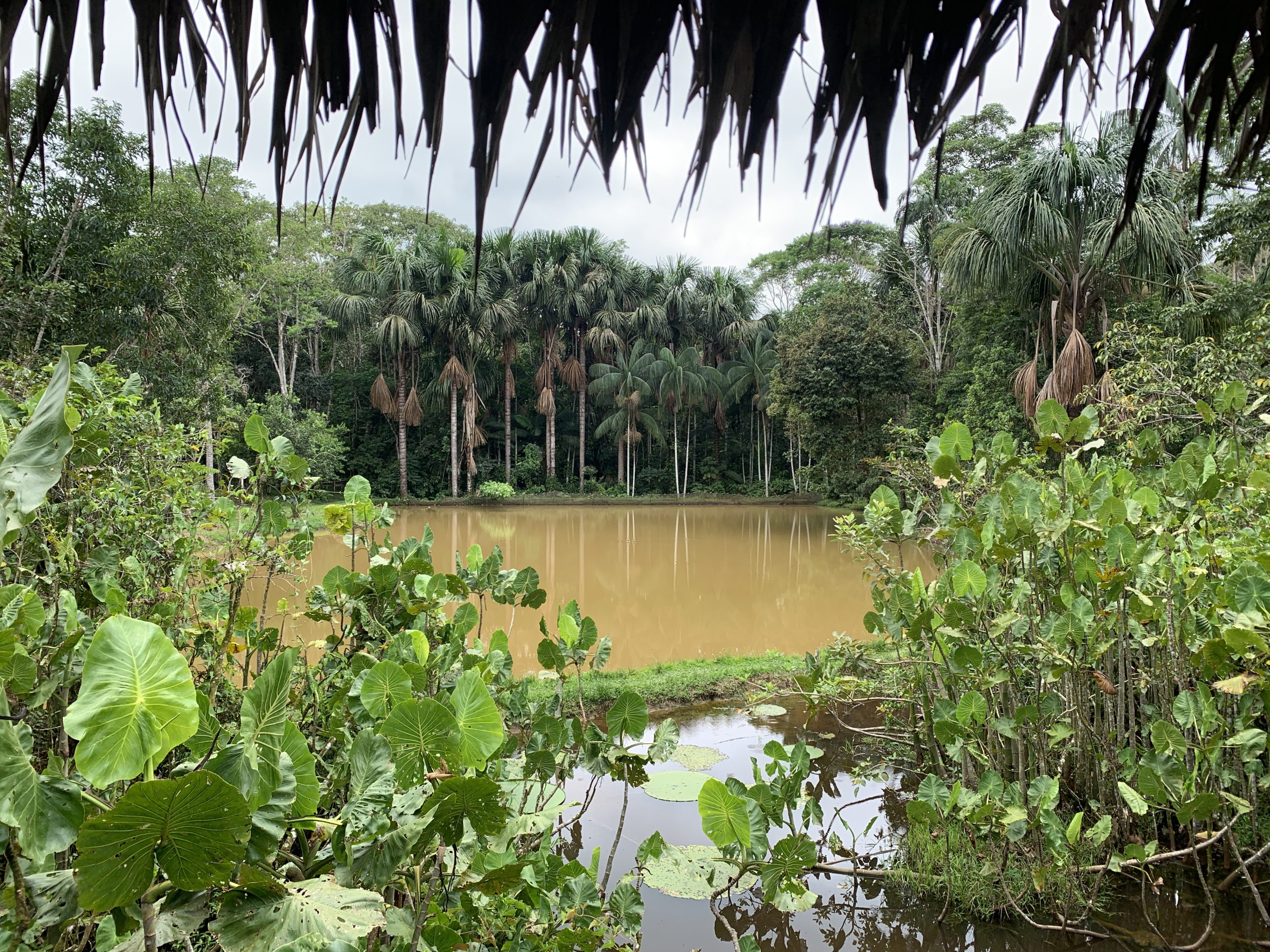
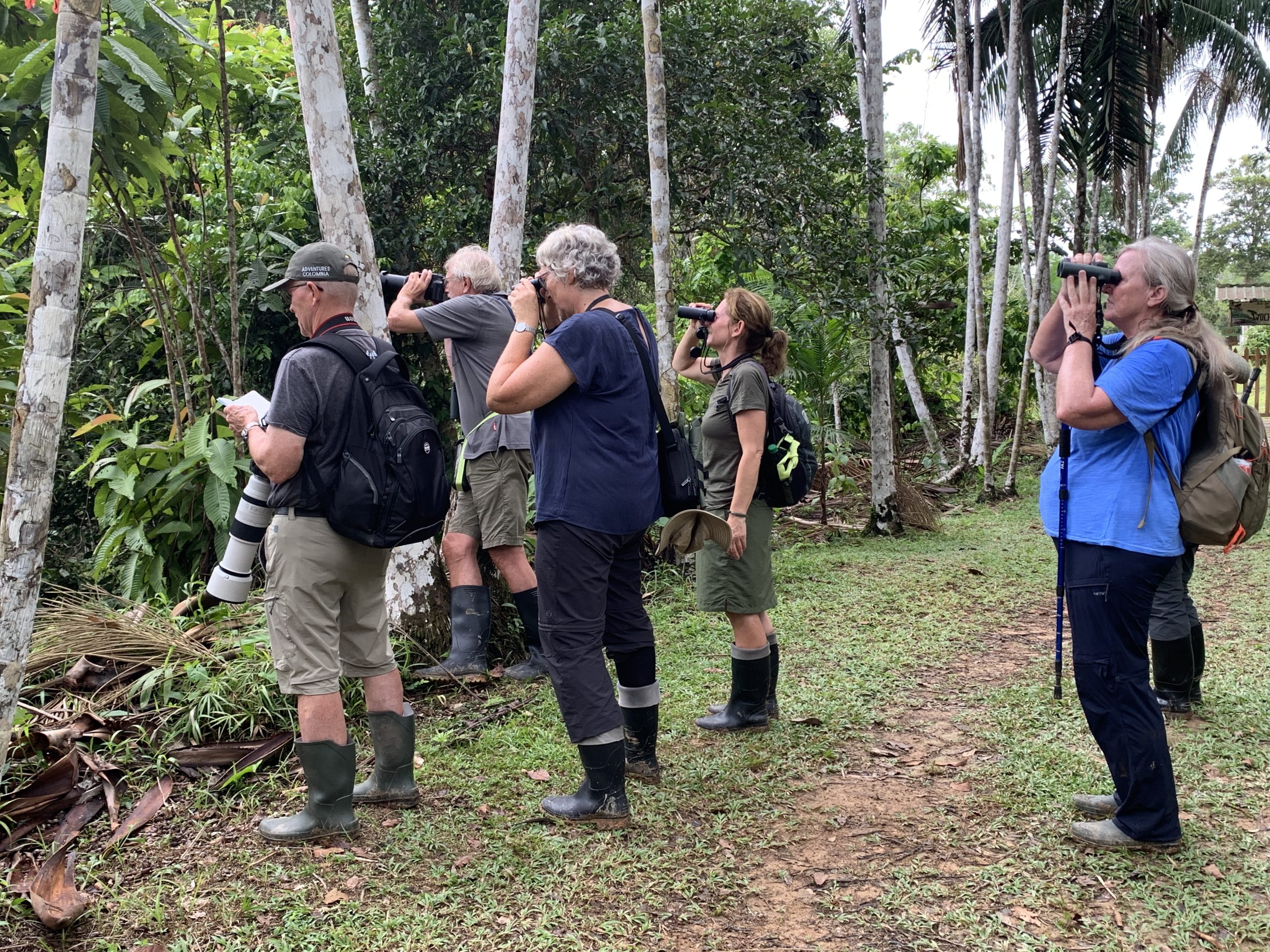
During the days here in the jungle I can add about 45 more bird species to my diary. The avid birders in our group have seen even more.
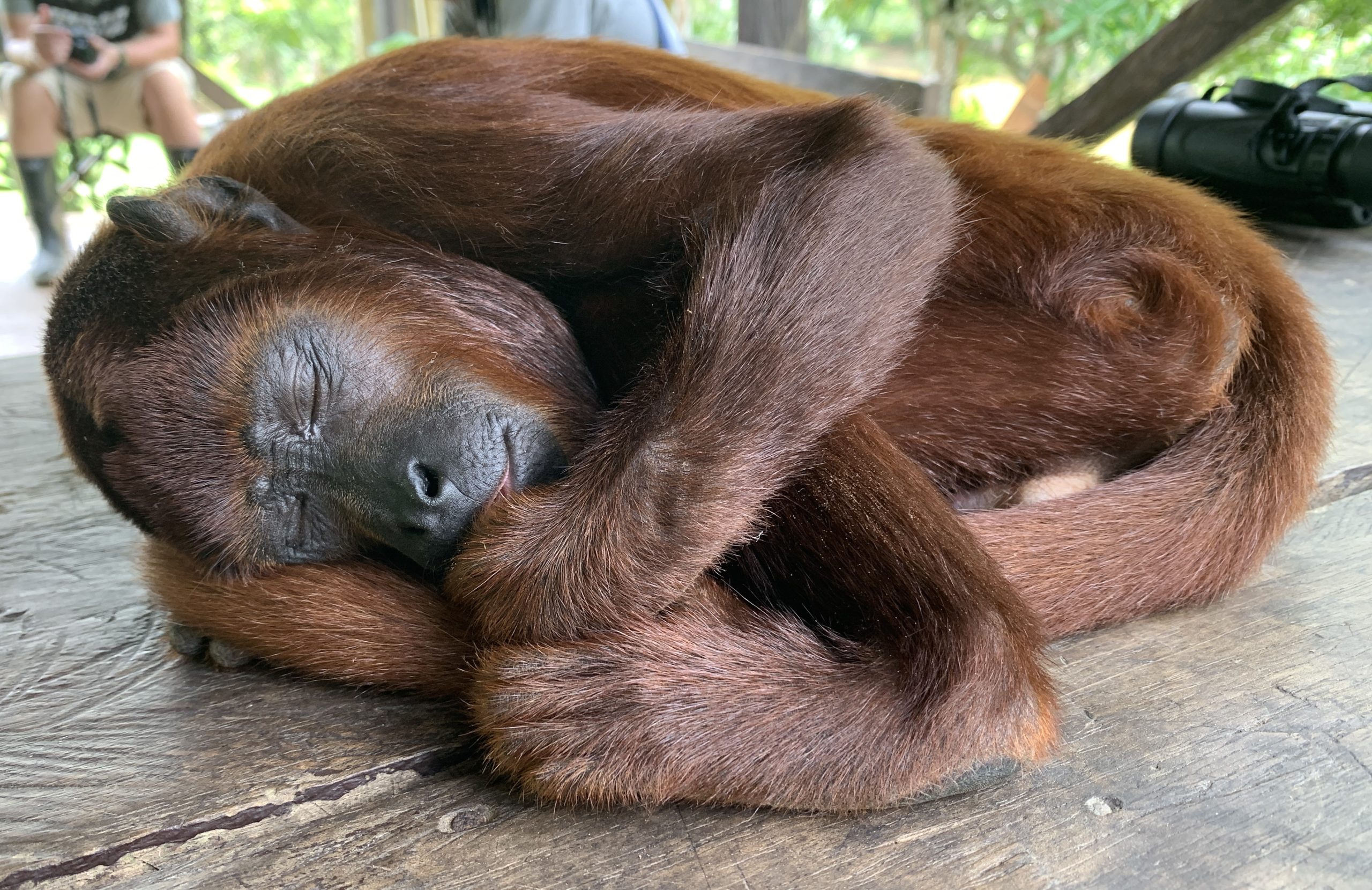
We also see caiman, catfish (HUGE mouth), pygmy marmoset – the world’s tiniest and maybe cutest monkey – and a two-year-old pet howler monkey. Sucking his thumb for comfort, the howler monkey youngster looks to me like someone who really, really misses his mother and his group. Monkeys are, after all, social animals and not meant to hang out alone.
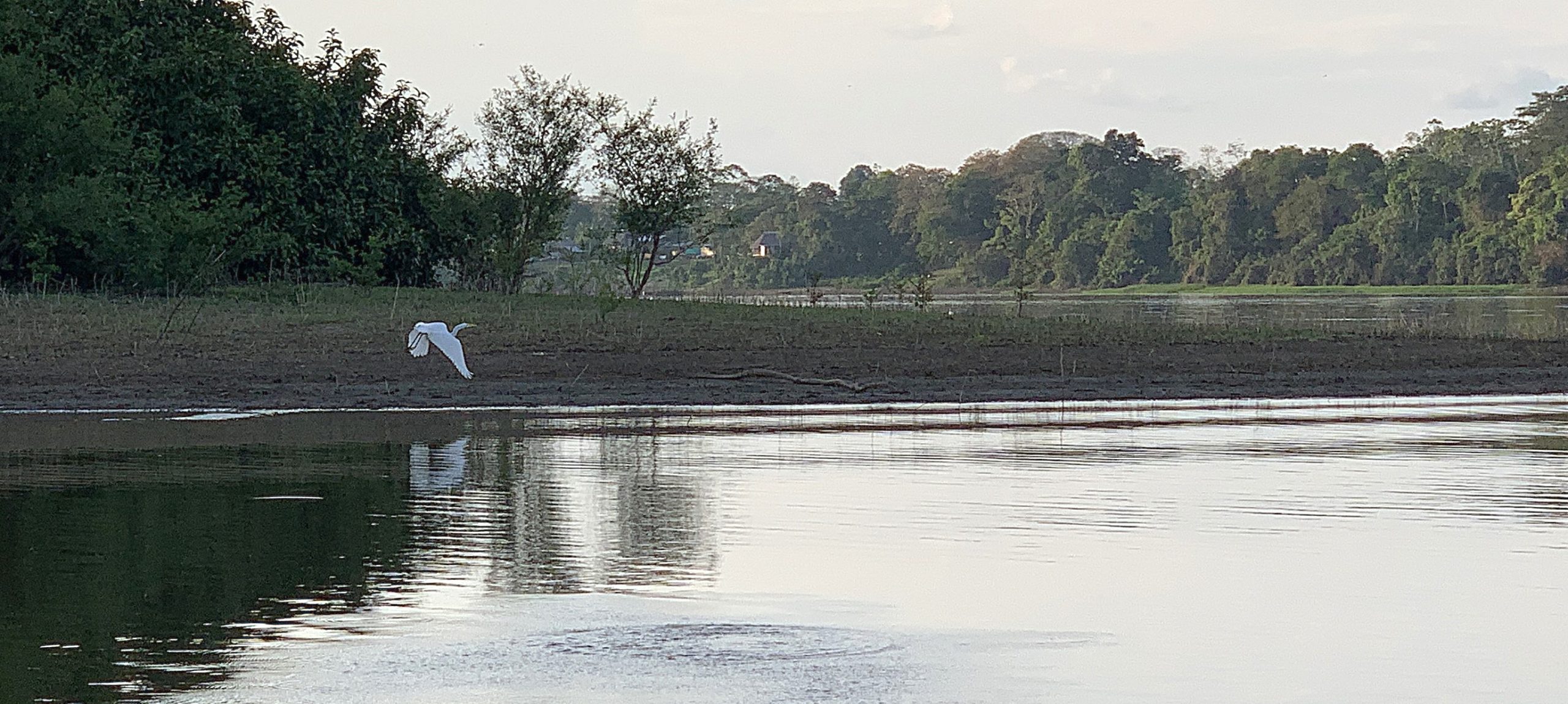
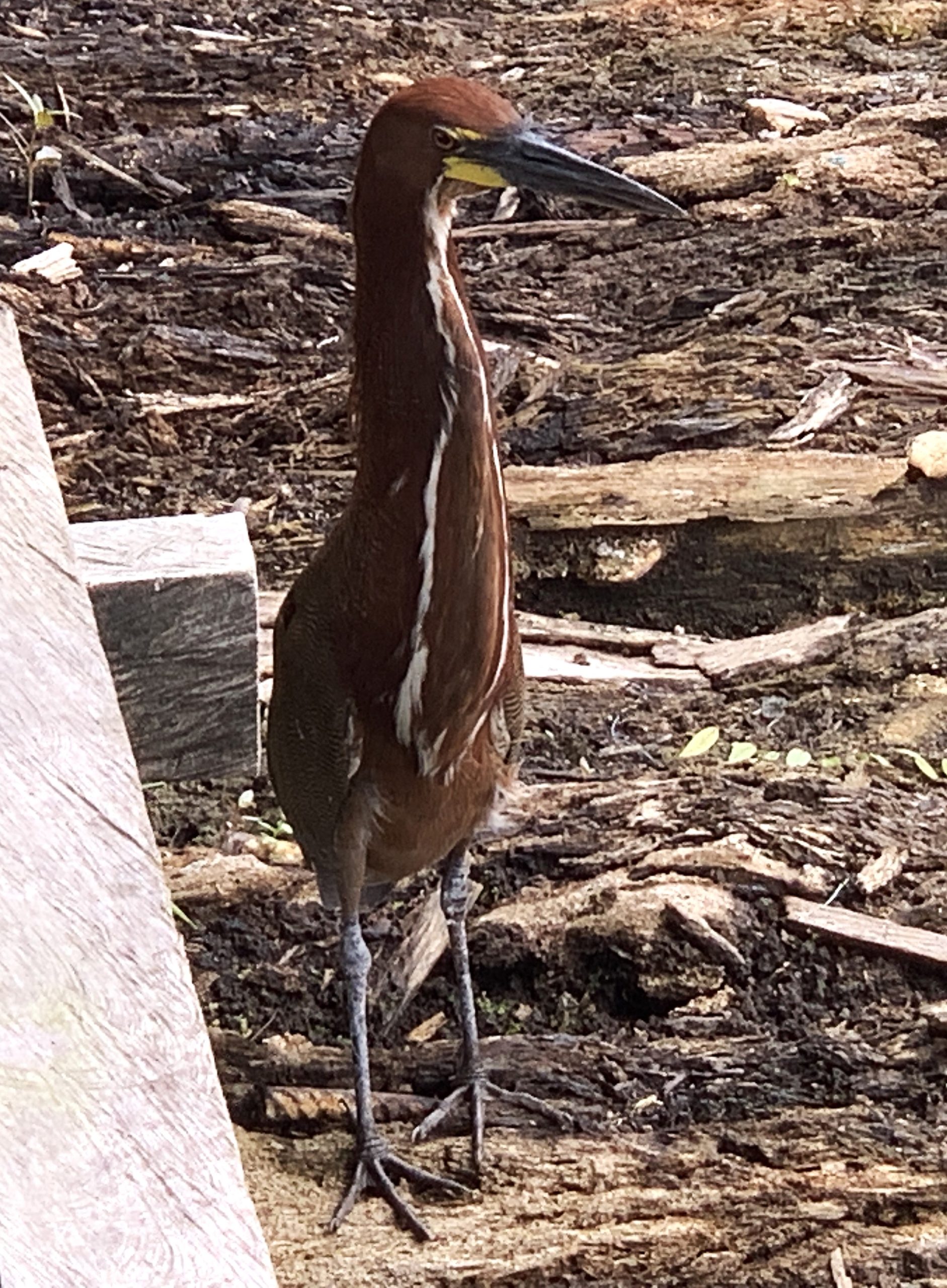
You can already now start guessing how many bird species I recorded on the whole 18-day trip to Colombia. Here are a couple more (unidentified heron uppermost and Rufescent Tiger Heron below that). You will find the answer in the last article of the travel blog, so stay tuned!