Colombia’s national tree is in danger.
A lot of our time is spent walking up and down mountain paths in various natural reserves and parks, enjoying the scenery, and keeping our eyes peeled for birds. We sometimes share trails with horses and mules.

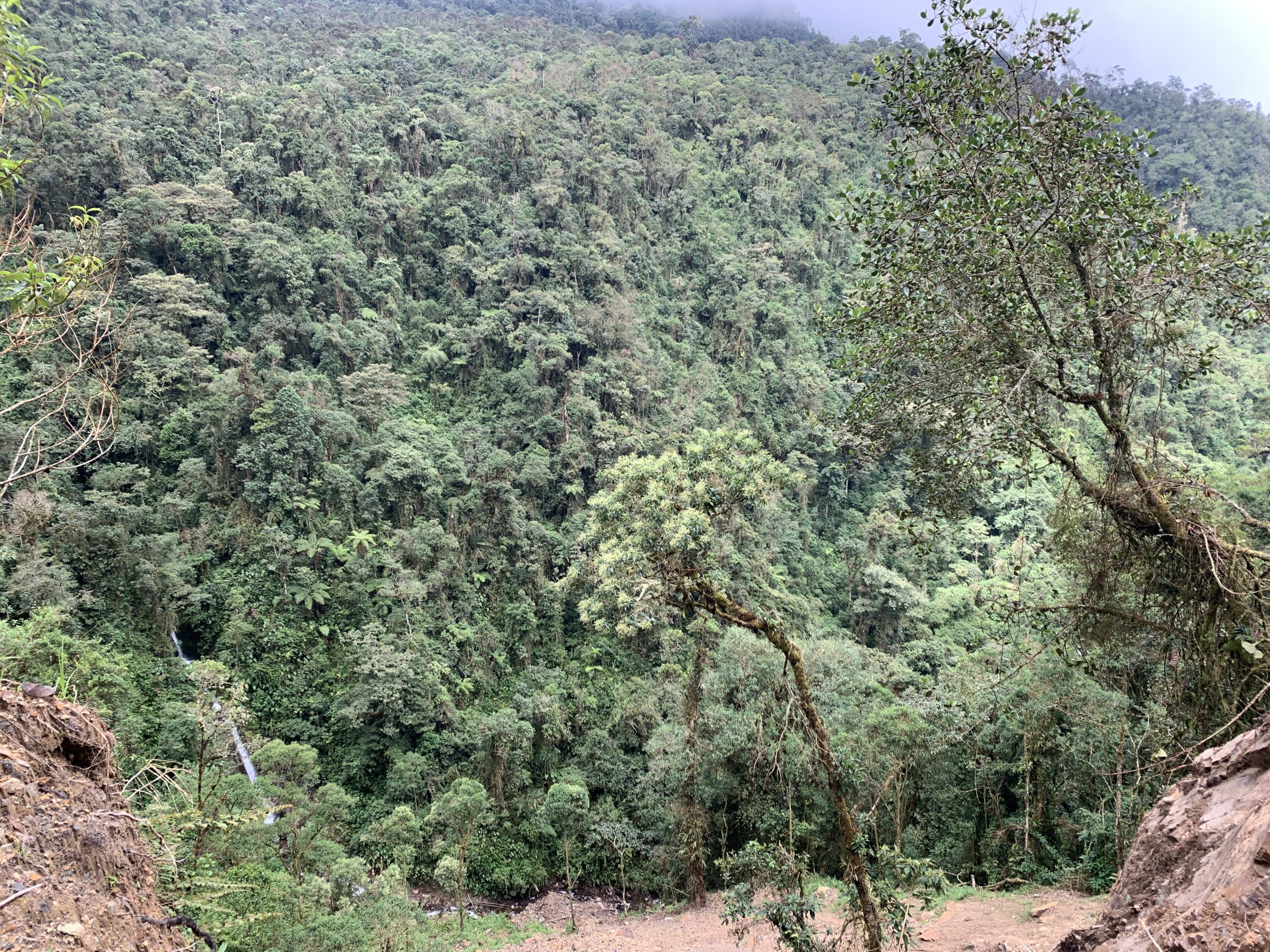
Normally, the mountainsides are lush with greenery.
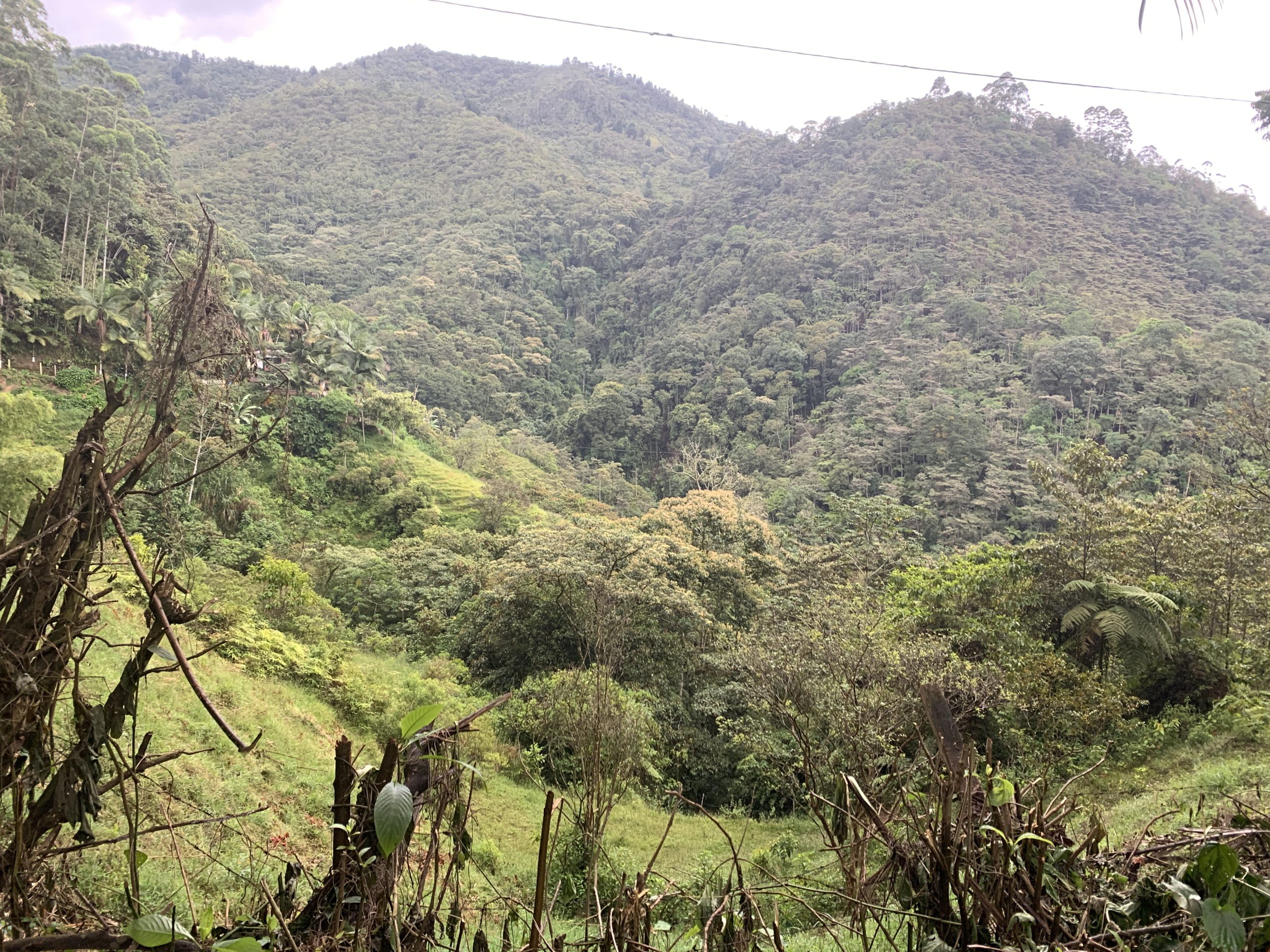
However, as is the case in so many countries, human activity is encroaching on natural habitats. One of the places where this is evident is the Cocora Valley in the eastern Andes, south of Manizales. Here, the slopes of the Andes have been shaved to make way for grazing lands for cattle.
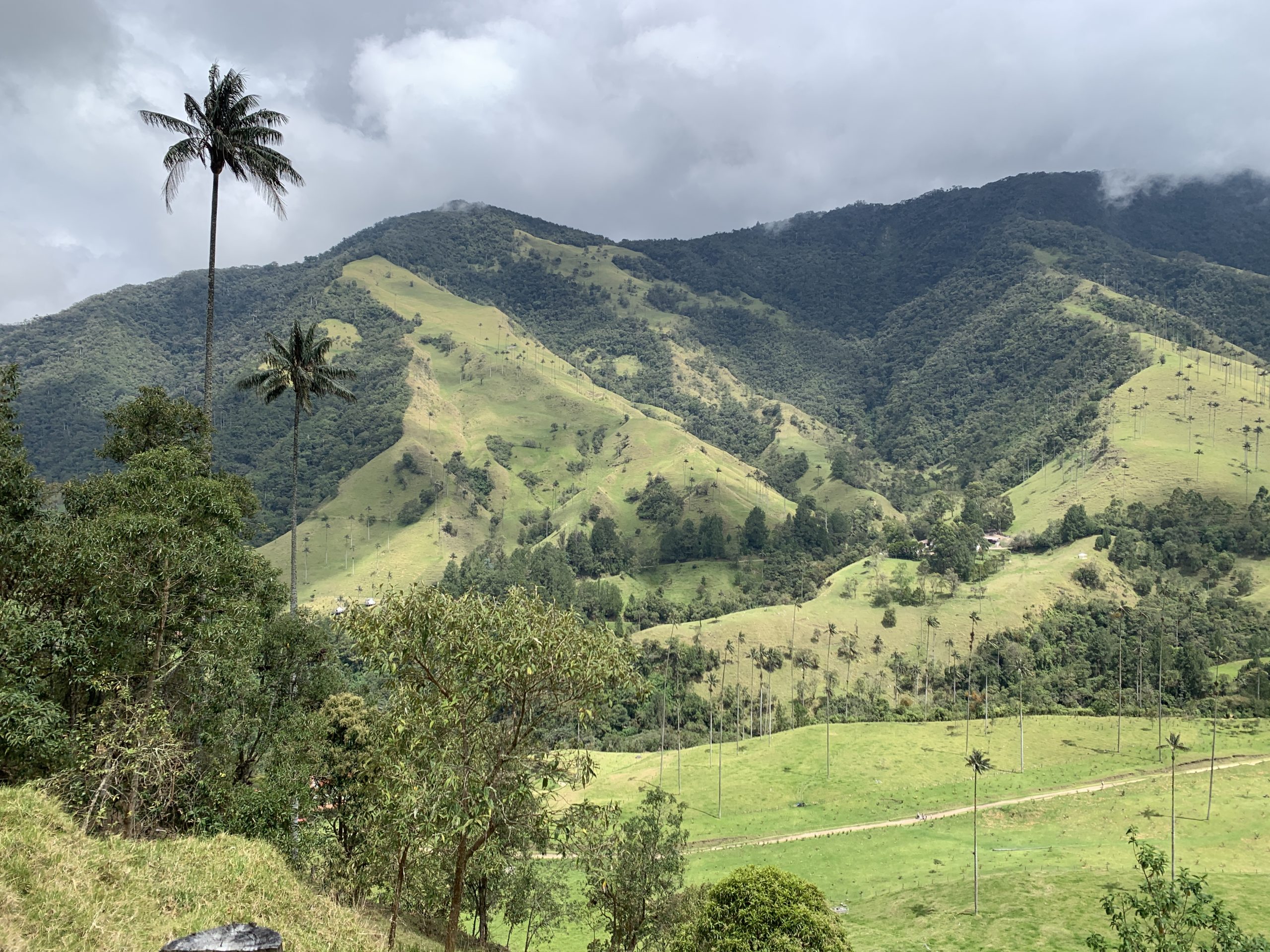
Denuding the mountains of their forests not only creates perfect conditions for erosion and landslides, it also makes life difficult for certain plants and animals. In the Cocora Vally a notable example is the wax palm, which can reach heights of up to 60 metres.
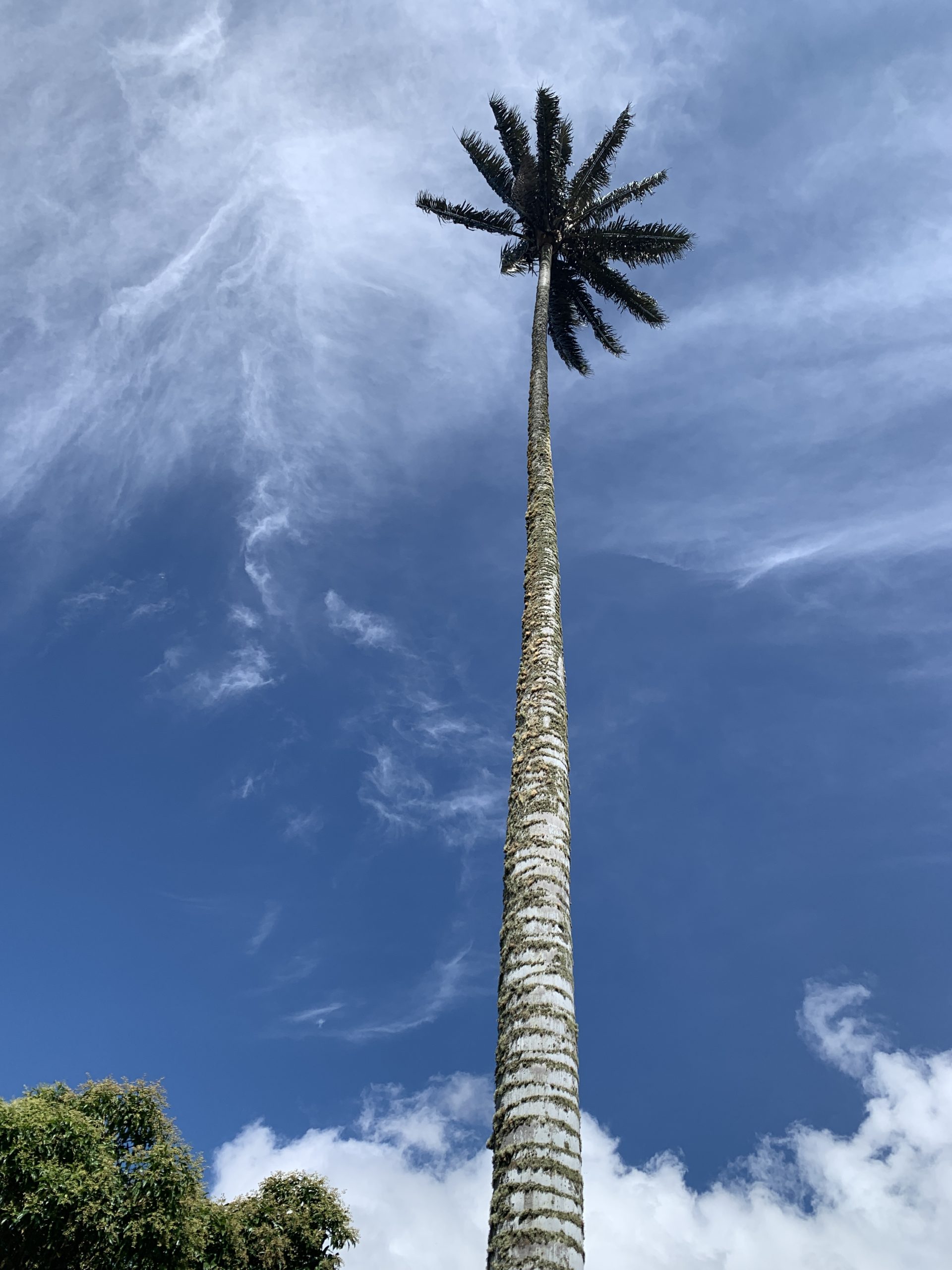
These trees provide habitats for many unique life forms, including the endangered species yellow-eared parrot (which we were fortunate enough to see at a nature reserve earlier in the trip). The trunks of wax palms are covered in a waxy substance that protects the trees against parasites. Humans have felled the trees to harvest the wax to make candles. They have used the fruit of the wax palm for cattle and pig feed, and the palm leaves in Catholic celebrations of Palm Sunday (harvesting the leaves from young trees damages them to death). And humans have felled the forest to make way for pastures.
In light of the fact that the wax palm is Colombia’s national tree, efforts have been made to protect it. Farmers now leave a few of the iconic trees standing. These efforts are wasted, though, because the wax palm cannot survive in the open. It needs the protection of fellow trees in a forest. The trees in these photos, although tall, will never reach a height of 60 metres or even close to it. They will topple over before that.
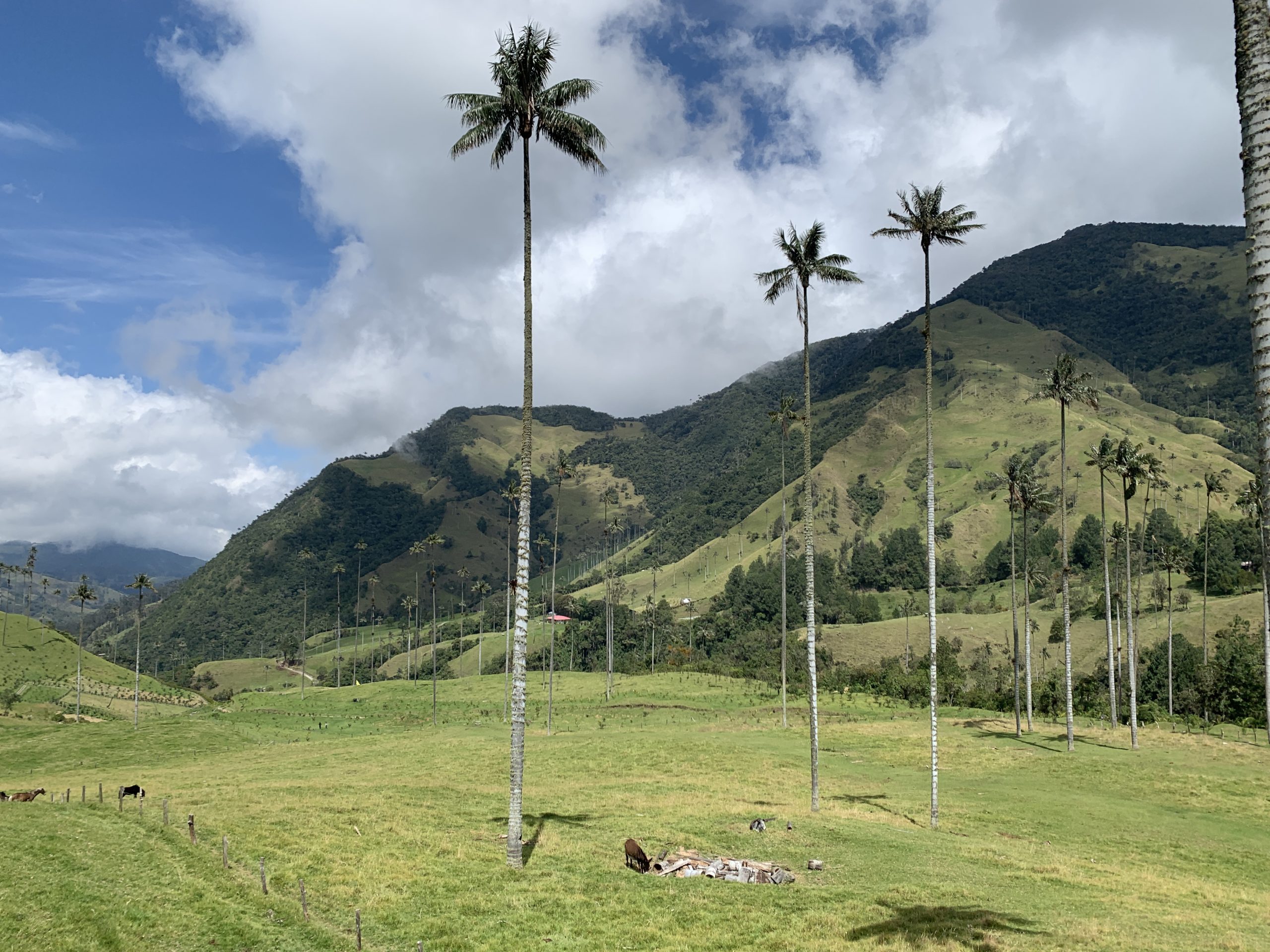
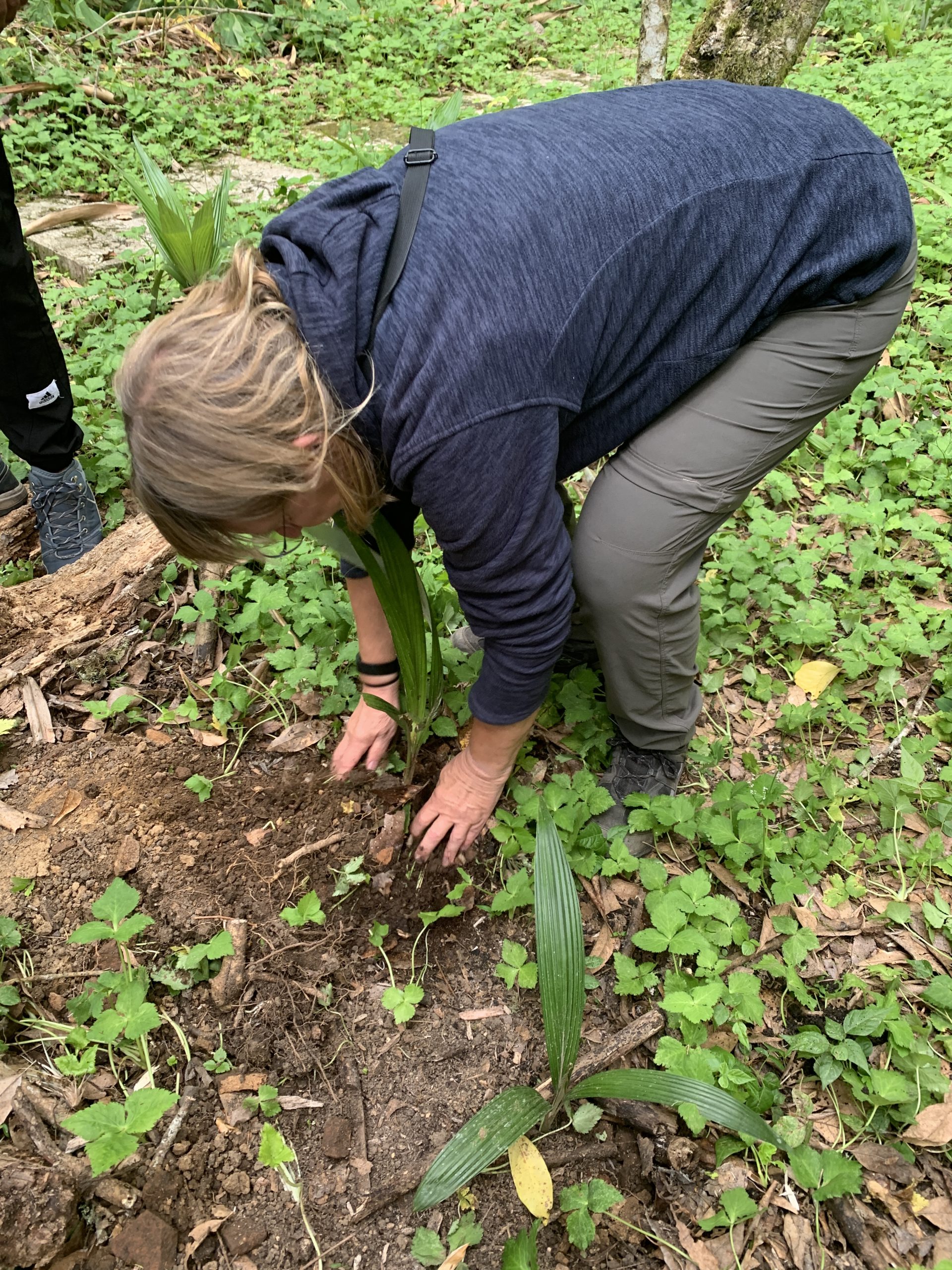
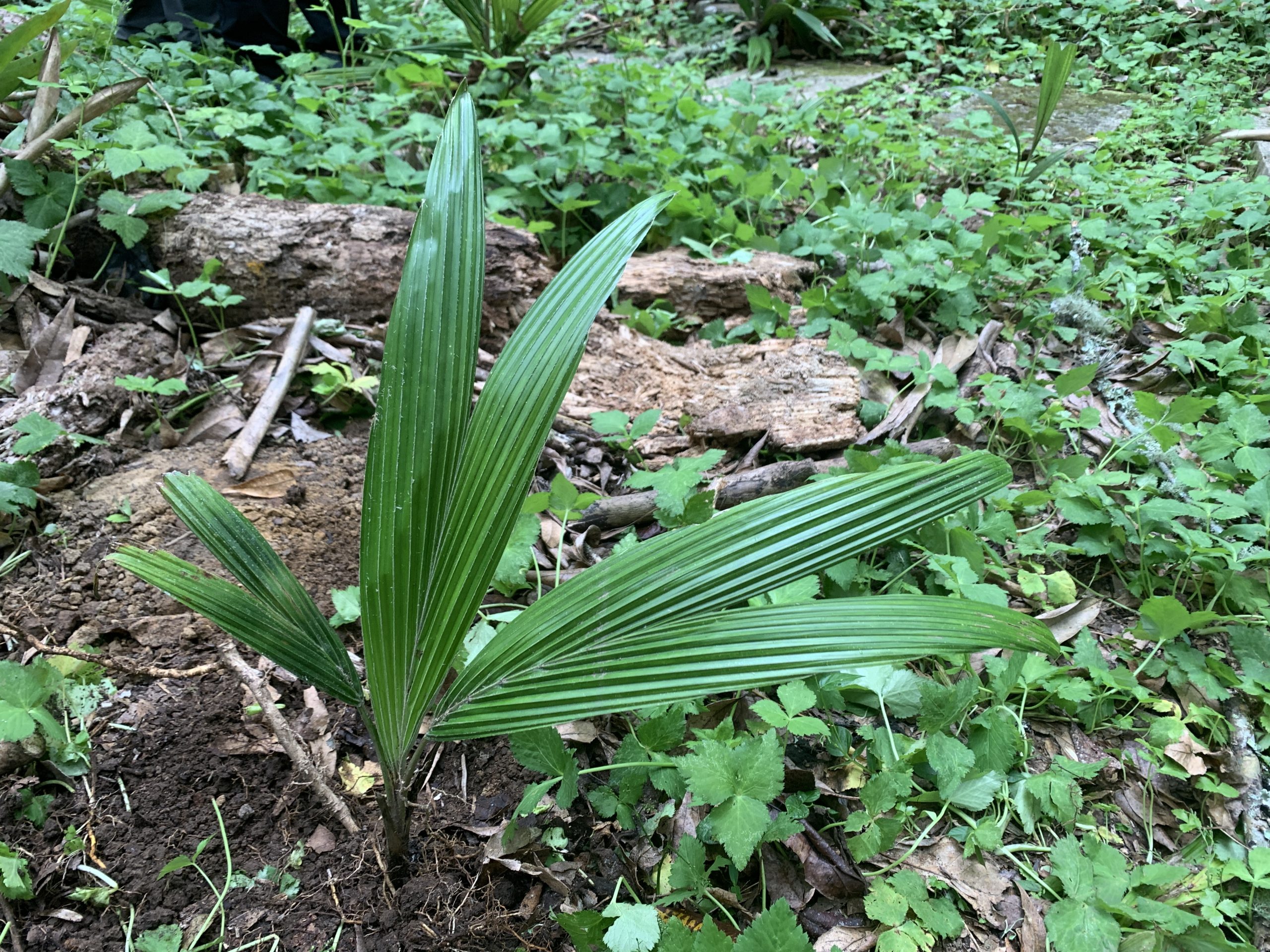
Wax palms need to be planted within a forest, not stand like solitary sentinels in an otherwise bare landscape. This is what three of us in my travel group do after an invitation from the owner of a restaurant we visit. After lunch we follow him into his private forest.
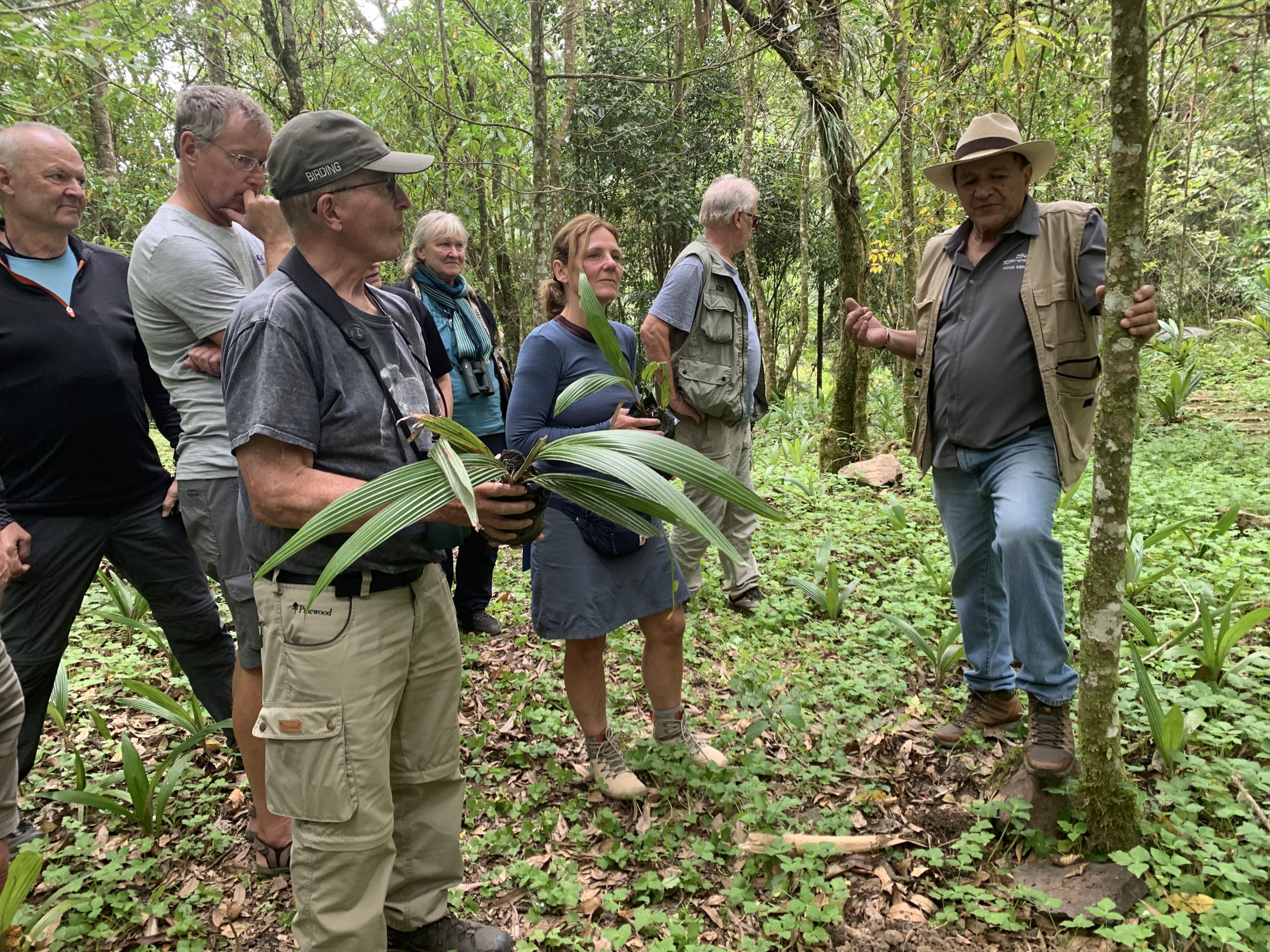
The three of us, one of them being myself, carry young wax palms with us. As the others watch and take pictures, we plant them amidst a whole lot of other trees so they can grow and hopefully thrive in a protected environment. The photo shows my tree.